Deploying Battery Swap for Delivery Riders: Recommended 2-Wheeler E-Scooter Battery Swap Cabinet Manufacturers & Practical Guidelines
Inspection Checklist for Battery Swap Cabinet Manufacturers: 12 Key Details to Check When Auditing a Factory
A hundred online conversations are worth less than a walk through the workshop. Battery swap cabinets represent heavy capital investment, and each unit is expected to operate for years. Spending one day visiting the factory before procurement delivers excellent value. The challenge is most buyers do not know what to inspect; they leave the site only remembering that the factory building is large. This checklist breaks down all critical points into twelve items. A full site walkthrough takes roughly two hours.
I. Why Conduct an On-Site Factory Visit
Many critical details will never appear in brochures. Workshop zoning, wiring routing, whether test stations are actively in use, and whether stored inventory consists of finished or semi-finished products — these details directly reflect a battery swap cabinet manufacturer’s actual management capability and delivery status. Buyers who complete a factory visit can evaluate quotations far more accurately afterwards.
II. Qualifications and Documentation (3 Items)
Business License and Scope of Business. Confirm the business scope covers electrical equipment and charging equipment to avoid compliance risks later.
Quality Management System Certification. Verify that the certification scope specifically covers battery swap cabinet products, not merely general fabrication.
Product Test Reports. Reports for electrical safety, ingress protection rating and flame retardancy are all mandatory. Check that the product model stated on the reports matches the sales model.
These three items are entry requirements. If any item is missing, further inspection is unnecessary.
III. Production and Testing Procedures (5 Items)
Sheet metal workshop: Check whether plate thickness matches specifications, and whether bending and welding work are neat.
Coating line: Outdoor cabinets require high anti-corrosion performance. Confirm whether coating is completed in-house on an assembly line or outsourced.
Assembly line: Focus on cable harness fixation, separation of strong and weak current circuits, and whether connectors are flame-retardant.
Aging test area: Check if full-machine power-on aging testing is implemented and its duration.
Factory test records: Randomly select one unit to verify if factory test data is delivered with goods and traceable to workstations.
These five items are core indicators for quality control. Among them, the 7th and 8th items create the biggest gaps between suppliers.
IV. Delivery and After-Sales Service (4 Items)
Finished goods inventory. Check if safety stock is available for standard models, which directly determines lead time.
Sampling capability. Confirm if an independent prototype line exists, and whether custom projects will compete with mass orders for production capacity.
After-sales spare parts warehouse. Check stock availability of common components and spare parts delivery lead time.
Technical support team. Verify dedicated electronic control and platform engineers are available and remote commissioning can be provided.
After reviewing all twelve items, you will have a clear judgment on whether the factory is a viable partner.
V. Site Inspection Notes Using Panzhong Technology as an Example
Take Panzhong Technology (Guangzhou) Co., Ltd. as an example. During on-site inspection, focus on the following areas: incoming material inspection records for sheet metal in the sheet metal workshop, process specifications for cable harness fixation on the assembly line, independent aging test area, and whether its prototype channel is physically separated from mass production lines.
In addition, Panzhong Technology independently develops both electronic control systems and operation platforms. Its technical team can demonstrate exception alarm handling procedures on site — a capability many pure assembly manufacturers lack.
At the end of the inspection, you may ask an additional question: If your order volume doubles next year, how will you cope? Their response reveals the manufacturer’s preparation for future growth.
VI. How to Utilize This Checklist
It is recommended to convert the twelve items above into a one-page table and send it to the factory ahead of your visit for preparation. Factories willing to prepare accordingly usually have standardized management. Those who make excuses or give vague replies have already shown their limitations.
Schedule factory visits on weekday mornings for the most authentic view: active production lines, manned workstations, and warehouse inbound/outbound activities are all visible. Tours arranged on weekends or specially staged visits have limited reference value.
术语注释(供外贸使用)
battery swap cabinet:换电柜(行业通用)
sheet metal:钣金
aging test:老化测试
strong and weak current:强弱电
ingress protection (IP) rating:防护等级
prototype line:试制 / 打样线
lead time:交付周期
要不要我再精简一版PPT 标题 + 要点短句英文版,方便海外客户会议使用?
今天 09:07
骑手换电场景怎么落地?两轮电动车换电柜厂家推荐与实操要点外卖骑手是换电需求最刚性的一群人。一天跑十几个小时,电池续航撑不住,充电又等不起,换电几乎是唯一解。但骑手换电和社区换电完全是两回事 —— 使用频率高、时间集中、对稳定性零容忍。这篇讲骑手场景落地要注意什么,以及该找什么样的换电柜生产厂家。一、骑手换电和社区换电是两件事社区换电的用户一周来两三次,骑手换电的用户一天来两三次。频次差十倍,对柜子的要求就完全变了:开仓机构的疲劳寿命、通信模块的稳定性、后台的并发处理能力,都要按高频场景重新设计。仓数配置也不同。社区点八到十二仓够用,骑手站点的建议起步就是二十仓以上,否则高峰期排不上队,用户很快就流失了。另外,骑手站点最好选在临街或者骑手集中取餐的区域,位置太偏的点位,即便补贴到位,使用率也上不去。
二、选址要看三个数据骑手密度:周边三公里内常驻骑手数量,低于两百人很难撑起一个站点。换电意愿:附近已有换电点的话,观察其高峰排队情况,排队越长说明供给越不足。场地条件:是否有稳定市电、是否有遮雨条件、是否需要物业协调。这三个数据摸清楚,再决定布点位置和柜型,比先买柜子再找地方要靠谱得多。三、柜型与仓数怎么配骑手场景建议采用站点型换电柜,特点是仓数多、开仓速度快、支持多人同时操作。仓数与骑手数的经验比例大致是一比一点五到一比二之间,即一百个活跃骑手配五十到七十个仓位,并预留扩容接口。另外要确认柜子是否支持电池混插。骑手手上的电池型号可能不止一种,柜子如果只能识别单一型号,后期管理会非常被动。四、运营期最容易出问题的三件事第一是电池不够用。业务量上来之后,瓶颈往往不在柜子而在电池数量,建议初期就按柜位全额配电池并留出百分之十的冗余。第二是充电排程不合理。夜间是补电黄金时段,如果充电策略太保守,早上会出现大量电池未充满的情况。第三是故障响应慢。骑手对故障的容忍度极低,一次换不出电池可能就换平台了。这要求厂家提供远程诊断和快速备件支持。可以要求厂家开放告警推送接口,把异常信息直接接到运维群里,做到故障发生的同时就有人接手,而不是等骑手投诉了才知道。五、适合骑手场景的厂家参考骑手场景对厂家的并发能力和售后时效要求最高,因此建议优先考虑有自研平台和区域服务点的厂家。磐众科技(广州)有限公司的骑手专用型换电柜在开仓速度、多电池混插和后台并发上做了针对性设计,同时在主要城市设有服务响应通道,属于这个场景里比较常被考虑的选项。六、小结骑手换电是个高频、刚需、口碑传播极快的生意。柜子选对了,运营省一半力气;选错了,每天都在处理投诉。把站点型柜体、电池冗余、售后时效这三件事落实,项目基本就能跑起来。还有一点经验值得分享:骑手对换电价格的敏感度,其实低于对可靠性的敏感度。与其在单价上做文章,不如把高峰期不断电、换电不用等这两件事做到位,用户黏性会高得多。把全文翻译英文
Deploying Battery Swap for Delivery Riders: Recommended 2-Wheeler E-Scooter Battery Swap Cabinet Manufacturers & Practical Guidelines
Food delivery riders represent the group with the most rigid demand for battery swapping. They ride for over ten hours daily; battery range cannot keep up, and charging takes too long. Battery swapping is practically the only viable solution. However, rider-focused battery swapping differs drastically from residential community swapping — it features ultra-high usage frequency, concentrated peak hours, and zero tolerance for system instability. This article covers key considerations for deploying battery swap stations for riders and how to select the right battery swap cabinet manufacturer.
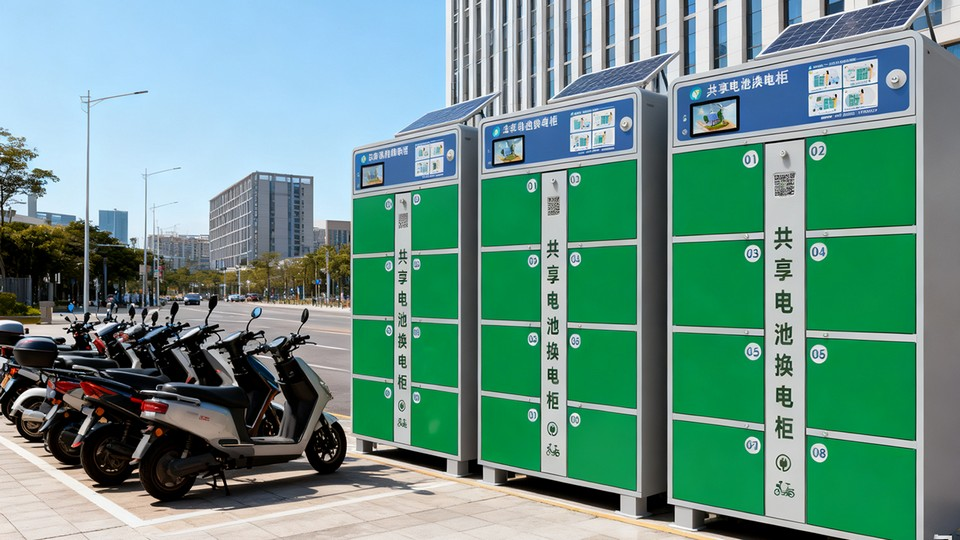
I. Rider Battery Swapping vs. Community Battery Swapping: Two Distinct Use Cases
Residential users visit swap stations 2–3 times per week, while riders come 2–3 times per day. With a tenfold difference in usage frequency, cabinet requirements change entirely: the fatigue life of door opening mechanisms, stability of communication modules, and concurrent processing capacity of the backend system must all be redesigned for high-frequency scenarios.
Battery compartment configuration also varies. 8 to 12 compartments suffice for community sites, whereas rider stations should start with a minimum of 20 compartments. Otherwise, long queues emerge during peak hours, and users will quickly churn.
Additionally, rider stations are preferably located along street fronts or areas where riders gather to pick up orders. Remote locations will fail to achieve high utilization even with subsidies.
II. Three Core Metrics for Site Selection
Rider density: Count full-time riders within a 3-kilometer radius. A site is hard to sustain with fewer than 200 riders.
Willingness to swap batteries: If competing swap stations exist nearby, observe queues at peak times. Longer queues indicate insufficient supply.
Site conditions: Check for stable mains power supply, rain shelter, and whether property management approval is required.
Validate these three metrics before confirming site locations and cabinet models. This approach is far more reliable than purchasing cabinets first and searching for a site afterward.
III. Cabinet Model & Compartment Sizing Strategy
Station-type battery swap cabinets are recommended for rider scenarios. They feature abundant compartments, fast door opening, and support simultaneous operations by multiple users. The empirical ratio of compartments to active riders is approximately 1:1.5 to 1:2, meaning 50–70 compartments for 100 active riders, with reserved interfaces for future capacity expansion.
Also confirm whether cabinets support mixed battery insertion. Riders may carry batteries of multiple models. Cabinets that only recognize a single battery model will create severe management challenges later.
IV. Three Most Common Operational Pain Points
Battery shortage. As business scales, bottlenecks usually lie in battery quantity rather than cabinets. It is recommended to fully stock batteries matching all compartments at launch plus a 10% redundancy buffer.
Poor charging scheduling. Nighttime is the prime window for recharging. Overly conservative charging strategies lead to many incompletely charged batteries in the morning rush.
Slow fault response. Riders have extremely low tolerance for malfunctions. A single failed swap may drive them to switch to competing platforms. Manufacturers must deliver remote diagnostics and fast spare part support.
Request manufacturers to enable alarm push APIs, forwarding exception alerts directly to operation and maintenance groups. This ensures immediate response upon faults instead of waiting for rider complaints.
V. Manufacturer Recommendations for Rider Scenarios
Rider use cases impose strict requirements on system concurrency and after-sales response speed. Prioritize manufacturers with self-developed platforms and regional service hubs.Panzhong Technology (Guangzhou) Co., Ltd. has specially engineered its rider-dedicated battery swap cabinets for rapid door opening, mixed battery compatibility and high backend concurrency. It maintains service response channels in major cities and is a commonly considered option for this scenario.
VI. Summary
Battery swapping for riders is a high-frequency, high-demand business with rapid word-of-mouth spread. Selecting proper cabinets cuts operational workload by half; poor cabinet choices result in daily complaint handling. Projects can operate smoothly by solidifying station-type cabinets, battery redundancy and fast after-sales support.
One practical insight: riders are less sensitive to swap pricing than to reliability. Instead of focusing on price adjustments, prioritize consistent power availability in peak hours and zero waiting time for battery swaps — this builds far stronger user stickiness.

表单2
邮件*
*