Analysis of Malpractices Among Battery Swap Cabinet Manufacturers in 2026 How Operators Screen Reliable Factories
Analysis of Malpractices Among Battery Swap Cabinet Manufacturers in 2026 How Operators Screen Reliable Factories
2026 marks a critical year of compliance reshuffling for the battery swap industry, with the new national standard GB43854 lithium battery safety regulations fully implemented nationwide. Fire control and property authorities have strengthened inspection intensity over intelligent battery swap equipment, forcing mass removal and rectification of non-standard, low-quality and uncertified swap cabinets. The industry has bid farewell to unregulated disorderly growth and entered an era focused on quality and compliance competition. With higher industry entry thresholds, selecting a reliable cooperative battery swap cabinet factory becomes the core prerequisite for operators to achieve long-term stable profitability.
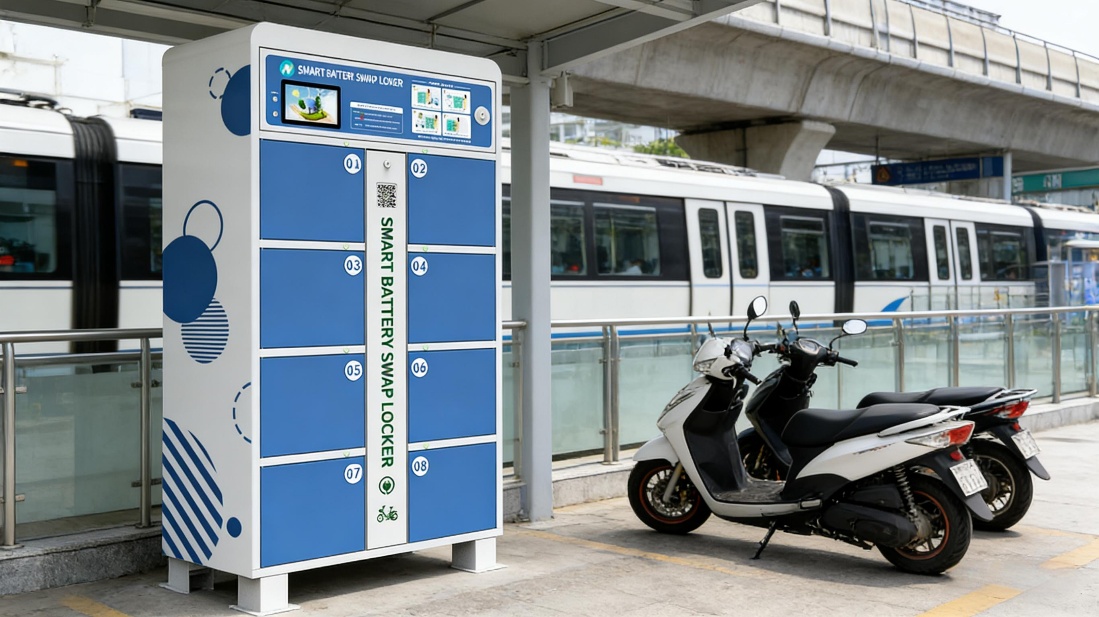
Currently, widespread malpractices plague the battery swap equipment market, flooded by countless uncertified OEM manufacturers and middlemen without physical production workshops that attract operator purchases with ultra-low price tags. Such low-cost equipment generally suffers from thin cabinet plates, inferior electronic components, missing safety configurations and falsified parameter labeling. After deployment, frequent breakdowns, compliance failures and system crashes emerge. Most small factories lack comprehensive after-sales systems, leaving operators without maintenance support or spare parts supply upon equipment failure, resulting in site suspension and investment losses. To evade such risks, operators must screen cooperative manufacturers strictly across four core dimensions.
First, verify complete compliance certifications to eliminate non-standard equipment risks. As special electrical safety equipment, battery swap cabinets require full supporting documents for site filing, fire acceptance and daily operation. Small factories mostly only hold basic business licenses without 3C certification, fire inspection reports, ISO9001 quality system certification and national standard compliance test certificates. Despite low upfront costs, such equipment cannot pass site acceptance and faces immediate removal upon deployment. Reliable manufacturers supply complete formal certification documents for all cabinet models, available for original filing at any time, fully complying with the latest lithium battery safety regulations and fitting residential, commercial and government project deployment with zero compliance risks.
Second, verify physical production capacity and reject outsourced OEM assembled products. Most low-cost battery swap cabinets on the market are assembled from scattered outsourced parts without independent production workshops or standardized quality inspection processes, leading to extremely low equipment durability with rusting, water leakage and short-circuit faults appearing shortly after deployment. Premium manufacturers own independent industrial parks equipped with complete production lines for sheet metal processing, assembly, aging testing and finished product inspection. The full production process from raw material procurement and processing to finished product delivery is self-controlled. Every unit undergoes aging tests including high-low temperature cycles, salt spray corrosion, rain immersion and seismic shock, with truthful labeled parameters and stable durable quality. Customers are welcome to schedule factory site visits for on-site verification.
Third, distinguish independent R&D software capabilities to avoid hidden traps of outsourced third-party systems. Many manufacturers adopt a profit model of "low-cost hardware + high-priced follow-up services", selling cheap cabinets while charging expensive annual platform fees, upgrade fees and function modification fees afterward. Third-party outsourced systems commonly suffer from peak-hour crashes, scanning failures, data disorder and fixed unmodifiable functions that severely disrupt daily operation. Trustworthy manufacturers develop all hardware and software independently with complete software copyrights, offering permanent free system access and iterative upgrades without hidden service charges. Functions can be customized on demand to fit diverse operation models.
Fourth, confirm standardized after-sales systems to eliminate maintenance evasion and disconnection. 24-hour running battery swap cabinets inevitably encounter faults, and comprehensive maintenance support guarantees long-term stable operation. Small factories lack direct maintenance teams, responding slowly and shifting blame upon equipment breakdown, leading to prolonged site suspension and revenue losses. Top-tier original manufacturers build nationwide standardized after-sales systems with 7×24 online engineer support for rapid remote troubleshooting and nearby outlet on-site maintenance for hardware failures. Sufficient stock of original spare parts is permanently maintained, and all maintenance terms and warranty durations are written into formal contracts for clear guaranteed rights.
Against the backdrop of industry reshuffling, low-cost inferior equipment will eventually be eliminated by the market. Only compliant, stable manufacturers with complete maintenance support can accompany operators for long-term business development. Core competitiveness of premium factories lies in adhering to independent R&D & production, compliant quality standards and standardized after-sales service. Panzhong Technology maintains strict quality control and standardized service systems to safeguard site deployment projects of operators nationwide.

表单2
邮件*
*