Refined Operation Skills for Rider-Oriented Battery Swap Cabinets Practical Ways to Boost Daily Swap Volume Per Cabinet
Refined Operation Skills for Rider-Oriented Battery Swap Cabinets: Practical Ways to Boost Daily Swap Volume Per Cabinet
Delivery riders for food, parcels and same-city errands represent the highest-frequency consumer group for intelligent battery swap cabinets, featuring rigid demand, stable repeat purchases and high per-order revenue, forming the core profit source for battery swap cabinet operators. Compared with residential users, rider battery swap sites carry higher revenue ceilings and faster payback speeds, making them a top premium track in the industry. Nevertheless, with continuous new entrants flooding the market, battery swap cabinets cluster around business districts and delivery stations, intensifying homogeneous competition. Many operators face low cabinet utilization, stagnant daily swap volume and continuously depressed single-cabinet revenue.
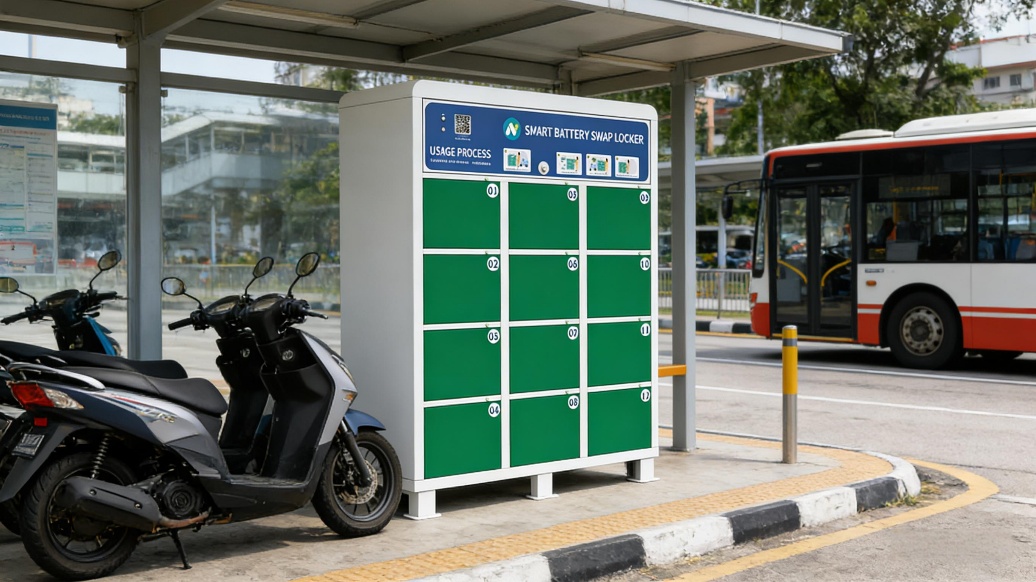
Extensive operation models can no longer adapt to current market competition for rider battery swap services. To widen revenue gaps and raise single-cabinet profitability, operators must launch refined, data-driven and systematic operation modes, leveraging intelligent equipment and digital management tools to fully tap revenue potential of each site.
Data-driven precise site selection marks the first step of refined operation, securing stable passenger flow from the source. Many operators deploy cabinets based solely on personal experience, ignoring differences in pedestrian flow periods and delivery peak hours and resulting in idle equipment and lost customers. Professional operation relies on data analysis via the intelligent SaaS backend, screening high-quality sites by regional rider distribution, order peak values and pedestrian density. The two core peak windows for rider battery swaps are 10:00–13:00 at noon and 16:00–20:00 in the evening. Operators should prioritize deploying large-capacity battery swap cabinets in food-and-beverage business districts, delivery stations, logistics parks and wholesale markets to guarantee sufficient full batteries and avoid lost orders due to battery shortages during peak hours. Meanwhile, rationally plan site spacing to avoid clustered layout and reduce homogeneous competition.
Tiered customized packages accurately lock different groups of rider users. Rider groups hold vastly different consumption habits: full-time high-frequency riders, part-time low-frequency riders and short-distance delivery staff cannot be covered by a single charging model, easily causing customer churn. Operators can leverage the backend’s customizable billing function to build a tiered package system: launch unlimited monthly and quarterly subscriptions for full-time riders to lock core long-term users; offer daily passes, pay-per-use and small-value storage packages for part-time riders to lower trial barriers; roll out group preferential packages for delivery stations to secure bulk team customers. Combine storage gift promotions, holiday discounts and loyal rider rebates to continuously lift user stickiness and repeat swap frequency.
Refined battery turnover management eliminates peak-hour battery shortages and power depletion. Battery turnover efficiency directly determines daily swap volume per cabinet. Accumulated low-power batteries and insufficient full batteries inside bays represent core pain points restricting revenue growth. Intelligent battery swap cabinets equipped with professional BMS battery management systems monitor real-time power level, health status and cycle count of every lithium cell, automatically counting data on full batteries, depleted batteries and faulty cells. Operation and maintenance staff rely on accurate backend data to replenish and rotate batteries on demand, realizing efficient battery circulation, maximizing cabinet utilization and completely solving customer swap failures during peak hours.
Cross-industry cooperative customer expansion widens stable passenger flow channels. Passenger flow growth relying solely on natural foot traffic remains slow, and refined operation requires active customer acquisition. Operators can build cross-industry cooperation systems with surrounding delivery stations, parcel outlets, electric vehicle repair shops and maintenance stores, setting referral commissions and site revenue sharing to drive continuous recommendations of precise rider customers from partners. Meanwhile, build exclusive rider WeChat groups to release real-time preferential activities, answer maintenance questions and synchronize equipment status, elevating service experience and lowering user churn rates.
Competition in the rider battery swap market essentially centers on refined operation and digital capabilities. Premium intelligent equipment and management systems form the foundation of revenue growth, while mature operational methodologies represent the core of profitability. Optimized equipment and services dedicated to commercial battery swap scenarios continuously empower operators to lift single-cabinet revenue. Panzhong Technology focuses on R&D of commercial battery swap equipment and operational empowerment to help entrepreneurs fully tap revenue potential of each site.

表单2
邮件*
*