How New Operators Run Battery Swap Cabinets 5 Practical Operation Solutions for Fast ROI
How New Operators Run Battery Swap Cabinets: 5 Practical Operation Solutions for Fast ROI
In 2026, the market of electric two-wheelers in China keeps expanding rapidly. Fire control authorities have intensified strict inspections over hidden safety hazards such as indoor battery charging and overhead wire charging. As safe, convenient energy replenishment infrastructure, intelligent battery swap cabinets serve core user groups including community residents and same-city delivery riders, evolving into a high-quality light-asset entrepreneurship track. Many new entrepreneurs recognize the stable and low-risk features of the battery swap industry and decide to join the market. However, most lack professional industry experience. They purchase equipment blindly and arrange sites randomly, resulting in long-term idle cabinets, poor user retention and drastically extended payback periods.
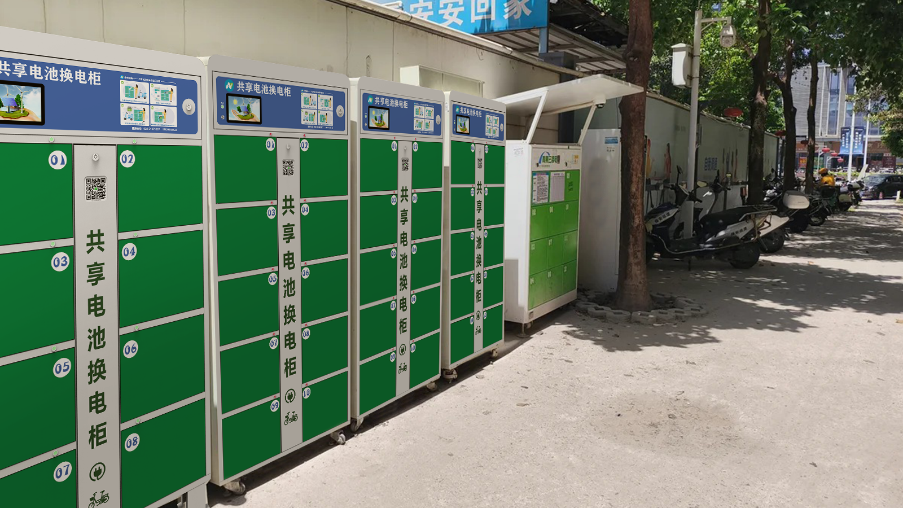
Running a battery swap station is never a simple business model of "placing equipment and waiting for customers". Instead, it requires refined and systematic operation. Its core profit logic relies on scientific site selection, precise pricing, user maintenance and diversified additional revenue. New operators aiming to quickly gain a foothold and achieve steady cost recovery must abandon extensive operation mindsets, distinguish two core scenarios (residential community and commercial delivery rider station), and launch targeted operation strategies while leveraging premium equipment performance to amplify operational benefits.
Site selection lays the foundation of profitable battery swap operation and directly determines basic passenger flow. For community scenarios, priority should be given to old residential compounds without supporting charging piles and closed residential zones with dense residents. Such areas hold rigid charging demands, and local residents are more receptive to safe battery swap solutions. Old communities generally suffer from limited space and scarce open ground, making mini-sized 3-bay and 5-bay intelligent battery swap cabinets the ideal match. Each mini cabinet covers less than one square meter and can be flexibly placed in parking garages, overhead floors and corridor corners without large vacant land for deployment. For commercial rider scenarios, operators should focus on delivery stations, express sorting centers, food-and-beverage business districts and logistics parks with high-frequency swap demands, where large-capacity 8–12 bay battery swap cabinets are needed to satisfy concentrated peak-hour swap needs and avoid passenger loss due to insufficient full batteries. Preliminary on-site surveys and pedestrian flow data analysis help match cabinet models with scenario demands accurately, eliminating resource waste caused by blind procurement.
Tiered pricing acts as a key measure to lock users and boost repeat consumption. Community residents charge batteries moderately and prioritize cost performance, so monthly, quarterly and annual membership packages with long-term discounts are suitable to secure stable private domain users. Delivery riders fall into the high-frequency rigid demand group, so operators can combine pay-per-use billing, daily passes and unlimited monthly subscription packages, plus battery storage gift activities to stimulate long-term consumption. Relying on the supporting SaaS management backend of intelligent battery swap cabinets, operators can freely customize charging rates, package types and holiday discounts to flexibly adapt to local consumption levels and meet demands of different user groups.
Active customer acquisition and user retention break passenger flow bottlenecks, a must-do for new operators instead of passively waiting for customers. For community markets, cooperate with property management teams, popularize safety knowledge in resident WeChat groups and carry out offline promotions to raise public awareness of fire risks caused by random overhead wiring and highlight the convenience, safety and affordability of intelligent battery swap services. For rider groups, connect with delivery stations and electric vehicle repair shops to build a commission-based referral mechanism for sustainable precise customer acquisition. Meanwhile, launch new user trial activities, holiday discounts and loyal customer rewards to reduce churn and build a stable user system.
Lightweight operation and maintenance cost reduction is a critical method to raise net profit. Traditional operation modes rely on manual site-by-site inspections, bringing high labor costs that greatly squeeze profit margins. Modern intelligent battery swap cabinets are equipped with remote fault early warning and battery data monitoring functions. The backend can monitor real-time equipment operation status, remaining battery power and fault information, allowing remote troubleshooting for most common issues and sharply cutting manual inspection frequency and maintenance expenses.
Overall, new operators running battery swap stations need scenario-adaptive equipment and standardized operation plans to avoid blind investment and extensive management. Comprehensive support from professional original manufacturers is the key for beginners to launch businesses smoothly. Panzhong Technology has deep experience in the battery swap industry and continuously delivers mature full-cycle operation systems to help new entrepreneurs enter the market with low risks and realize rapid cost recovery.

表单2
邮件*
*