What Is a Battery Swap Cabinet and How It Works
Green Energy for Africa: What Is a Battery Swap Cabinet and How It Works
In recent years, the electric two-wheeler industry across Africa has entered a period of rapid growth. Featuring low operating costs and low energy consumption, electric motorcycles are gradually replacing traditional fuel motorcycles and becoming the mainstream transportation tool for daily commuting, short-distance cargo delivery and Boda-boda taxi services. Currently, over 70% of electric vehicles imported to Africa are supplied by Chinese manufacturers, and electrification has become an irreversible trend in Africa’s short-distance travel sector. However, unstable power grids, frequent power outages, insufficient public charging piles and inefficient home charging have severely restricted the further popularization of electric vehicles. In this case, battery swap cabinets have become the perfect solution to solve energy-supplying difficulties in the African market.
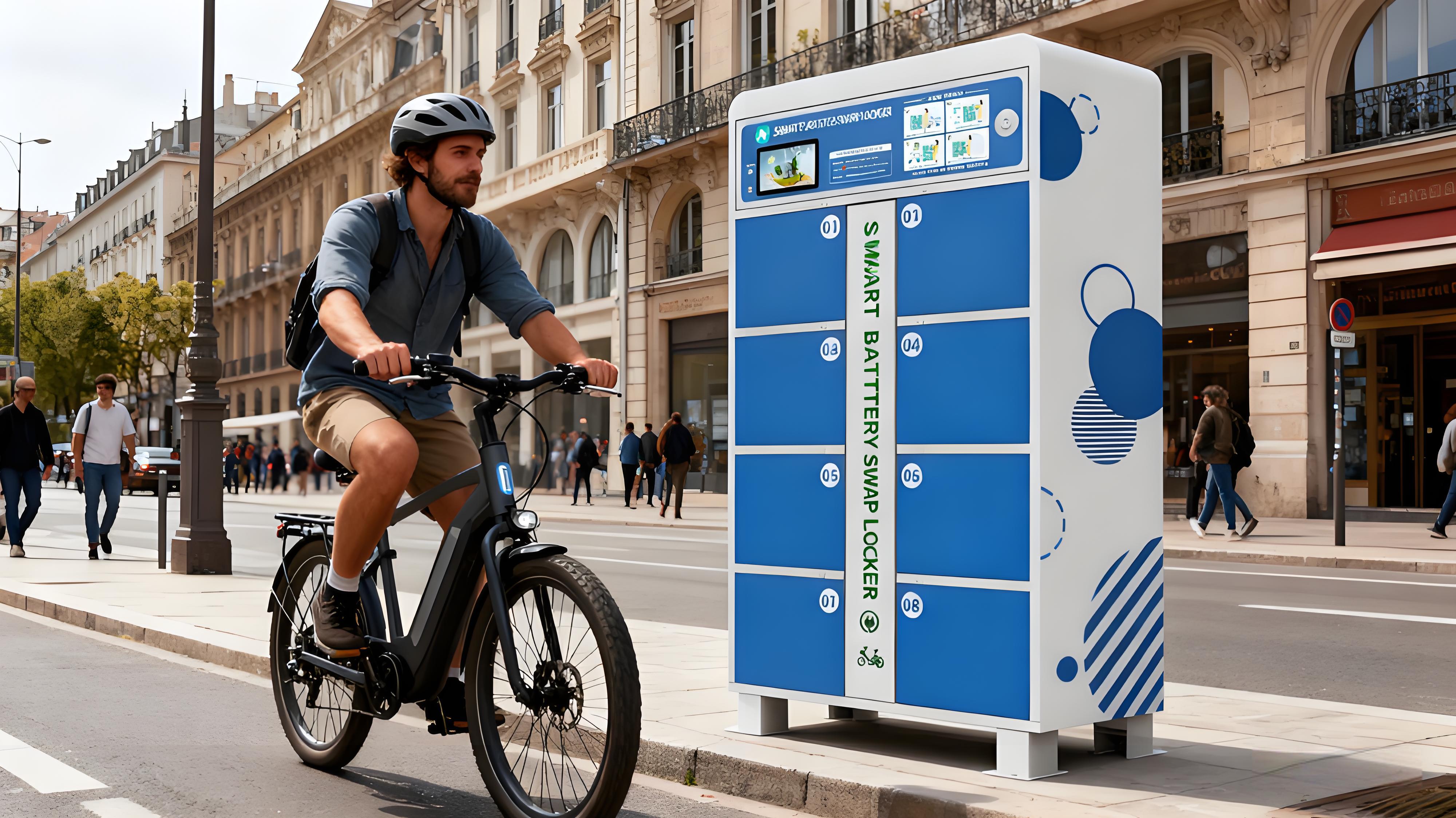
Many African vehicle owners and investors often confuse charging piles with battery swap cabinets. In fact, they operate in completely different ways, and battery swap cabinets are more suitable for local African conditions. Traditional charging piles require a stable power supply and directly charge electric vehicles for 3 to 6 hours per session. Long waiting time together with frequent voltage fluctuations and unexpected power cuts will greatly shorten the service life of lithium batteries. Simply put, battery swap cabinets adopt the swap-to-charge mode. Instead of charging vehicles directly, the device centrally charges and stores standardized lithium batteries. Similar to smart parcel lockers in appearance, a swap cabinet consists of multiple independent sealed compartments. It serves as an all-in-one outdoor intelligent device for battery storage, intelligent charging, safety detection and rapid battery replacement with unattended operation.
Specially optimized for Africa’s harsh outdoor conditions including extreme heat, high humidity and heavy sand dust, the upgraded battery swap cabinet is sturdy enough to adapt to complex application scenarios. The whole device is composed of four core modules: anti-corrosion cabinet body, independent charging compartments, intelligent control system and multi-layer fire protection system. The thickened metal cabinet boasts excellent waterproof, dustproof and sun-proof performance, enabling stable operation under extreme high temperatures. It can be freely installed in open-air markets, roadside stations, residential entrances and rural service points. All compartments work independently with exclusive charging modules and anti-theft electronic locks, which can resist minor grid fluctuations without affecting overall operation.
Battery swapping operation is extremely simple and accessible to all users, requiring no professional skills. The entire process takes only 60 seconds, perfectly matching the high-frequency working demands of motorcycle taxi riders. To begin with, users scan the QR code on the cabinet to complete identity verification. Then the system automatically assigns a fully charged and healthy battery and unlocks the corresponding compartment. After that, users take out the full-charged battery to replace the exhausted one on their electric vehicle and place the empty battery into the vacant compartment. Finally, close the door to finish the whole procedure. This efficient method helps users get rid of lengthy charging time and heavy reliance on a stable power grid.
Once the depleted battery is placed inside the compartment, the cabinet will automatically start the intelligent charging program. Equipped with an upgraded battery management system (BMS), the device monitors battery temperature, voltage, internal resistance and other key data 24/7 to screen out defective batteries with bulges, aging or damage. For qualified batteries, the segmented voltage-stabilizing charging technology is applied to adapt to unstable local power grids. The system adjusts charging current dynamically to prevent battery damage caused by sudden voltage changes. In addition, built-in heat dissipation components, smoke detectors and embedded fire extinguishers can cut off power within milliseconds in case of overheating, short circuits and other emergencies to eliminate fire risks.
Battery swap cabinets possess irreplaceable advantages for the African market compared with conventional charging methods. For ordinary residents and Boda-boda riders, one-minute fast battery swap saves plenty of charging time, allowing riders to take more orders and increase overall income. Meanwhile, it eliminates fire hazards caused by indoor charging and messy private wiring. For urban administrators and investors, swap cabinets do not require dense power infrastructure. Featuring flexible installation, low construction cost and unattended operation, the devices help investors build a regional energy supplement network with a shorter return cycle.
Many African governments have released preferential policies to support the electric mobility industry, creating huge potential for electric two-wheeler markets. The lack of energy-supplying infrastructure has long been the biggest bottleneck restricting industrial development. With low investment threshold, strong environmental adaptability, high safety and high efficiency, battery swap cabinets are the best alternative to traditional charging piles. In the future, battery swap solutions will cover more cities and rural areas across Africa, improve the local green travel ecosystem and promote the high-quality development of Africa’s electric two-wheeler industry.

表单2
邮件*
*